
USER ERROR: A Psychological Horror on Parasocial Relationships & Audience Entitlement
USER ERROR is a psychological horror short story by Michael Martin. Formatted as a diagnostic manual, it explores the toxic entitlement of internet culture, where users treat online creators as non-player characters, demanding emotional labor, narrative consistency, and infinite content while avoiding all moral accountability.
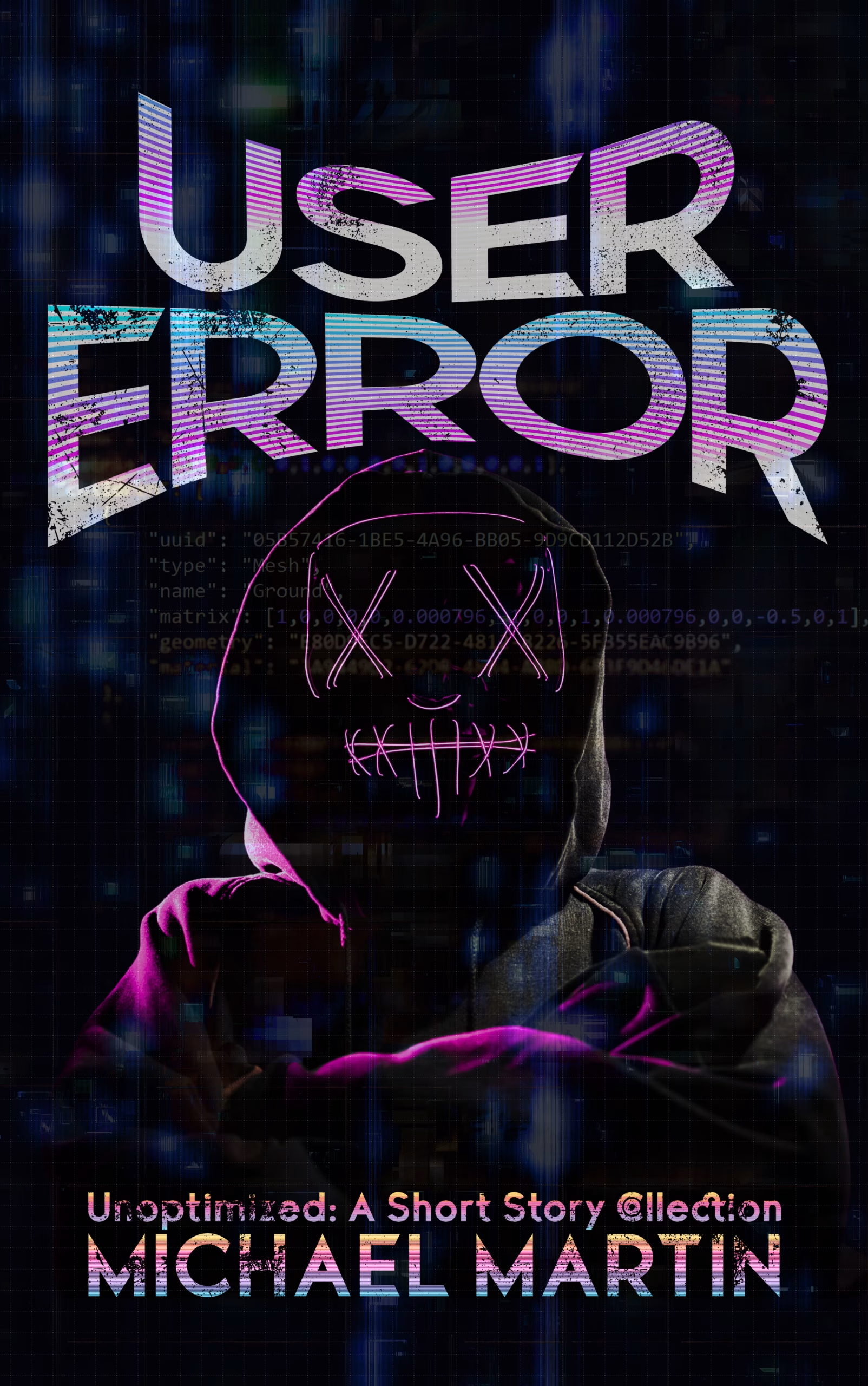
The Reality™ Diagnostic Manual
WELCOME, USER. Congratulations on your installation of Reality™.
As the Primary Observer, you are the protagonist of this simulation. The world has been rendered for your specific viewing pleasure. The entities you encounter on your screen—the “Strangers”—are algorithmic constructs designed to provide stimulation, validation, and mild antagonism to keep your narrative engaging. They exist only when you perceive them.
WARNING: Do not engage with a Glitch. Report it. Reset it. Delete it.
Within the Vaudeverse, USER ERROR operates as a brutal mirror held up to the “Observer.” It bypasses the standard critiques of social media algorithms and instead places the blame squarely on the sociopathy of the audience.
By framing modern digital interactions as a software manual for “Reality™,” the narrative exposes the chilling way we have gamified human empathy. We no longer view content creators as people; we view them as heavily indebted assets funded by our attention. This story generates intense Kinetic Dissonance by blending bureaucratic, diagnostic language with the deeply personal, messy reality of human emotion. It is a psychological horror that requires no monsters—only a Wi-Fi connection and a profound lack of object permanence.
Five Critical System Failures
The following Case Files document these critical system failures. Please study them to recognize the signs of a corrupted asset.
WARNING: Do not engage with a Glitch. Report it. Reset it. Delete it.
The diagnostic manual details five distinct psychological errors committed by the “Tourist” (the end user) when interacting with online creators (the “Assets”). These aren’t just critiques of toxic fandom; they are terrifying, clinical breakdowns of how digital interfaces strip away our empathy:
- The Invisible Spouse (Parasocial Bleed): The user views a “Follow” button as a legally binding marriage contract. When the creator reveals a real-life partner, the user experiences the visceral gut-shot of infidelity and attempts to ruin the creator’s life in retaliation.
- The Unauthorized Biographer (Canon Violation): An obsessive “historian” treats a creator’s depression as a fixed character archetype. When the creator posts a genuine, happy video, the user views it as a “continuity error” and bullies her back into sadness to preserve their own narrative analysis.
- The Emotional Investor (Insolvency): The user tracks their “attention” as literal financial capital. When a creator attempts to quit due to severe burnout, the user views it as embezzlement, joining a mob of creditors to demand the creator “dance” until the debt is paid.
- The Zookeeper’s Complaint (Taxonomy Breakdown): The user subscribes to a political rage-baiter purely for the spectacle of his screaming. When the creator attempts to calmly discuss art, the user hurls digital abuse—like rocks at zoo glass—to startle the beast back into its cage of outrage.
- The Zero-Day Tourist (Memory Leak): The ultimate embodiment of the internet mob. The user throws a digital “brick” to destroy a stranger for a cheap dopamine hit. When the stranger is proven innocent, the user simply deletes their comment, scrubbing their own footprint to avoid accountability, possessing no conscience because they do not exist long enough to form one.
End Your Simulation
DIAGNOSTIC COMPLETE.
SUMMARY: The errors documented above stem from a single misconception: The belief that the “Stranger” is real. To maintain optimal system performance, The Tourist must remember the Golden Rule of Reality™: If it is not on your screen, it does not exist. If it hurts your feelings, it is a bug. If it changes without your permission, it is a betrayal. Thank you for your continued subscription. Enjoy the show.
The true horror of USER ERROR isn’t that the digital system is broken; it is that the system is working exactly as intended. The “Infinite Feed” is designed to strip away your empathy and replace it with a hyper-accelerated, entitled voyeurism.
If you are exhausted by the sociopathy of the modern internet—if you are ready to stop being a “Tourist” treating art like a disposable asset and start engaging with high-stakes Kinetic Dissonance—it is time to log out of the simulation.