Overview
Kinetic Dissonance is a narrative technique within the Vaudesy framework where two radically opposing emotional registers—such as sacred cosmic dread and profane bureaucratic absurdity—collide simultaneously on the page without neutralizing each other. Instead of smoothing tonal shifts, it uses cognitive friction to generate active, anti-skim narrative momentum.
What Is Kinetic Dissonance in Simple Terms?
Quick Answer
In simple terms, Kinetic Dissonance is the refusal to let a story settle into a single, predictable emotional frequency. It forces high-stakes terror and mundane irreverence into the exact same scene, creating a volatile aesthetic tension that sharpens dread through absurdity rather than diluting it.
Mainstream publishing is currently obsessed with frictionless categorization. Traditional market packaging demands that a story fit neatly into a single emotional box: unrelenting grimdark nihilism where every character dies in a ditch, or sanitized cozy escapism where tea is brewed and nothing truly dangerous ever happens.
Both approaches treat the reader like a passive consumer who cannot handle cognitive complexity. When a story stays locked at a single aesthetic frequency for three hundred pages, the brain adapts, the pulse slows, and active reading devolves into mindless skimming.
Kinetic Dissonance rejects this artificial smoothing. It operates on the premise that human reality is never single-genre. The most profound moments of terror in life are routinely interrupted by petty logistical annoyances, and genuine grief is frequently accompanied by bitter, surreal humor. In my work across the Vaudeverse, dissonance is not a cosmetic flourish—it is the operational engine of The Promise of Collision.
Comic Relief vs. Kinetic Dissonance
The easiest way to misunderstand Kinetic Dissonance is to confuse it with traditional comic relief. They are mechanical opposites.
- Comic Relief (The Pressure Valve): Traditional comic relief is sequential. It builds dramatic tension, pauses the plot to let a sidekick crack a joke so the audience can exhale, and then resumes the serious tone. Its entire purpose is to lower the stakes and restore emotional equilibrium.
- Kinetic Dissonance (The Short-Circuit): Dissonance is simultaneous. It fuses the joke and the execution into the same beat. The absurdity does not provide relief; it acts as a cognitive abrasive that strips away comfort and makes the horror hit with greater physical force.
| Feature | Traditional Comic Relief | Kinetic Dissonance (Vaudesy) |
|---|---|---|
| Primary Function | Relieves tension (emotional reset) | Amplifies tension (cognitive friction) |
| Structural Timing | Sequential (Terror →Pause →Joke) | Simultaneous (The profane inside the sacred) |
| Reader Processing | Passive reassurance and comfort | Active engagement (Anti-Skim Architecture) |
| Tone Dynamic | Subordinate to the “main” serious tone | Autonomous coexistence of opposing extremes |
| Philosophical Root | Market-tested genre consistency | The Promise of Collision |
When an ancient, soul-devouring entity behaves with the petty procedural indifference of a middle manager, the scene does not become silly—it becomes deeply unsettling. By denying the reader the safety of a single emotional register, Kinetic Dissonance forces the imagination to stay fully awake.
The Three Tenets of Kinetic Dissonance (How the Friction Works)
Quick Answer
The three tenets of Kinetic Dissonance—Autonomous Coexistence, Friction Over Flow, and Texture Over Tropes—operate as the operational engine of the Vaudesy framework. Together, they eliminate passive reading by refusing tonal compromise, rejecting seamless transitions to enforce Anti-Skim Architecture, and generating momentum from visceral aesthetic collisions rather than paint-by-numbers genre tropes.
To execute Kinetic Dissonance, you cannot simply sprinkle jokes over a dark scene or drop a monster into a comedy. It requires a deliberate structural architecture. In my work across the Vaudeverse, I build tonal collisions upon three non-negotiable tenets.
1. Autonomous Coexistence (The Refusal to Compromise)
In conventional writing, introducing a second tone inevitably dilutes the first. Add humor to cosmic horror, and the horror supposedly loses its bite; add tragedy to satire, and the comedy supposedly loses its levity.
Autonomous Coexistence rejects this compromise entirely.
Both frequencies must remain at maximum volume simultaneously. When an ancient, flesh-rending demonic entity displays the dry, clerical apathy of a DMV processor, the administrative monotony does not soften the cosmic dread—it makes the horror uncanny and suffocating. Neither register blunts the other. Instead, they exist in violent, parallel autonomy, forcing the reader to hold two contradictory realities in their mind at once.
2. Friction Over Flow (Anti-Skim Architecture)
The modern publishing industry worships “flow”—a frictionless, hyper-optimized narrative rhythm designed to glide the reader from sentence to sentence with minimal resistance.
The problem with frictionless flow is that it puts the human brain to sleep.
When prose is too smooth, active visualization degrades into passive skimming. Kinetic Dissonance replaces flow with cognitive friction. By deliberately slamming contrasting tones together without transitional shock absorbers, the narrative forces an instant gear-shift in the reader’s mind.
This is the cornerstone of Anti-Skim Architecture:
- The Cognitive Jolt: Abrupt juxtapositions prevent the reader from predicting the next emotional beat.
- Active Decoding: The imagination must work to synthesize sacred dread and profane absurdity, cementing the scene into long-term memory.
- Engagement Over Speed: The story demands attention, penalizing passive consumption and rewarding deliberate, deep reading.
3. Texture Over Tropes (Sensory Momentum)
Traditional genre fiction relies on paint-by-numbers plot beats to generate momentum: the predictable inciting incident, the mandated mid-point twist, the algorithmically tested character archetypes.
Texture Over Tropes generates narrative propulsion from the raw sensory and emotional abrasiveness of the scene itself.
Momentum is not just created by asking “What happens next?” It is driven by the sheer curiosity of “How can these two textures possibly exist in the same room?” When high-stakes spiritual stakes (like the eternal fate of a soul’s Ruach) collide with the visceral, greasy grit of the mundane (like haggling over the price of butchering fireproof livestock), the scene crackles with life. The propulsion comes from the density of the world’s contradictory reality, not from an outline template downloaded off the internet.
The Prestige Screen vs. The Printed Page: Why Fiction Got Left Behind
Quick Answer
Contemporary fiction fell behind prestige television because traditional publishing enforced rigid, single-genre tonal consistency, while shows like Barry, The Bear, and Atlanta embraced jarring cognitive friction. Kinetic Dissonance bridges this gap in literature, replacing predictable emotional monotony with simultaneous, uncompromised collisions of existential dread and visceral absurdity.
For the last decade, visual storytelling underwent a profound evolution. Audiences abandoned tidy, predictable sitcoms and one-note procedurals in favor of prestige dark dramedies that thrive on intense emotional whiplash.
Consider how modern screenwriting handles tonal contrast:
- Barry: Stages cold-blooded contract executions inside amateur community theater rehearsals, letting lethal dread and pathetic comedic insecurity occupy the exact same second of screen time.
- The Bear: Fuses the suffocating, panic-attack pacing of a commercial kitchen line with the heavy, paralyzing weight of generational grief.
- Atlanta: Embeds surreal, off-kilter absurdity directly inside systemic danger and paranoia, refusing to smooth the transition between laughs and genuine peril.
Viewers celebrated these shows because real life is volatile. Human tension does not exist in an isolated emotional vacuum; it thrives at the chaotic intersection of heartbreak, terror, and absurdity.
Yet, while prestige television evolved, commercial genre fiction stayed trapped in safe, single-tone packaging.
The Three Gaps of Modern Genre Fiction
Traditional publishing remains obsessed with frictionless categorization. Readers are fed either unrelenting grimdark nihilism (where everyone suffers in a muddy ditch for thirty consecutive chapters) or toothless cozy escapism (where nothing dangerous ever happens). Both models produce reader fatigue.
| Narrative Failure in Genre Fiction | Prestige Television Innovation | Vaudesy Structural Solution |
|---|---|---|
| Monochromatic Tone: Forcing a single, predictable emotional register from chapter one to thirty. | Simultaneous Registers: Layering tragedy, stakes, and comedy in the same beat (The Bear). | Kinetic Dissonance: Opposing frequencies collide without diluting each other. |
| Frictionless Pacing: Over-smoothing transitions so the brain glides into passive skimming. | Cognitive Whiplash: Abrupt narrative cuts that demand active viewer processing (Atlanta). | Anti-Skim Architecture: Jagged structural friction that forces active visualization. |
| Predictable Formula: Relying on paint-by-numbers genre tropes to generate artificial momentum. | Atmospheric Texture: Driving propulsion through relational and environmental tension (Barry). | The Promise of Collision: High-stakes spiritual dread colliding with mundane grit. |
Tonal Consistency Is a Relic
The traditional creative writing dogma that an author must maintain “strict tonal consistency” is an outdated artifact of legacy mass-market packaging. It was invented to make books easy to categorize on supermarket wire racks and algorithmic storefronts.
In reality, tonal consistency is a recipe for creative inertia. When a narrative stays at a single frequency, the brain adapts, patterns become predictable, and the emotional stakes flatline.
Translating Prestige Friction to Burn In Hades
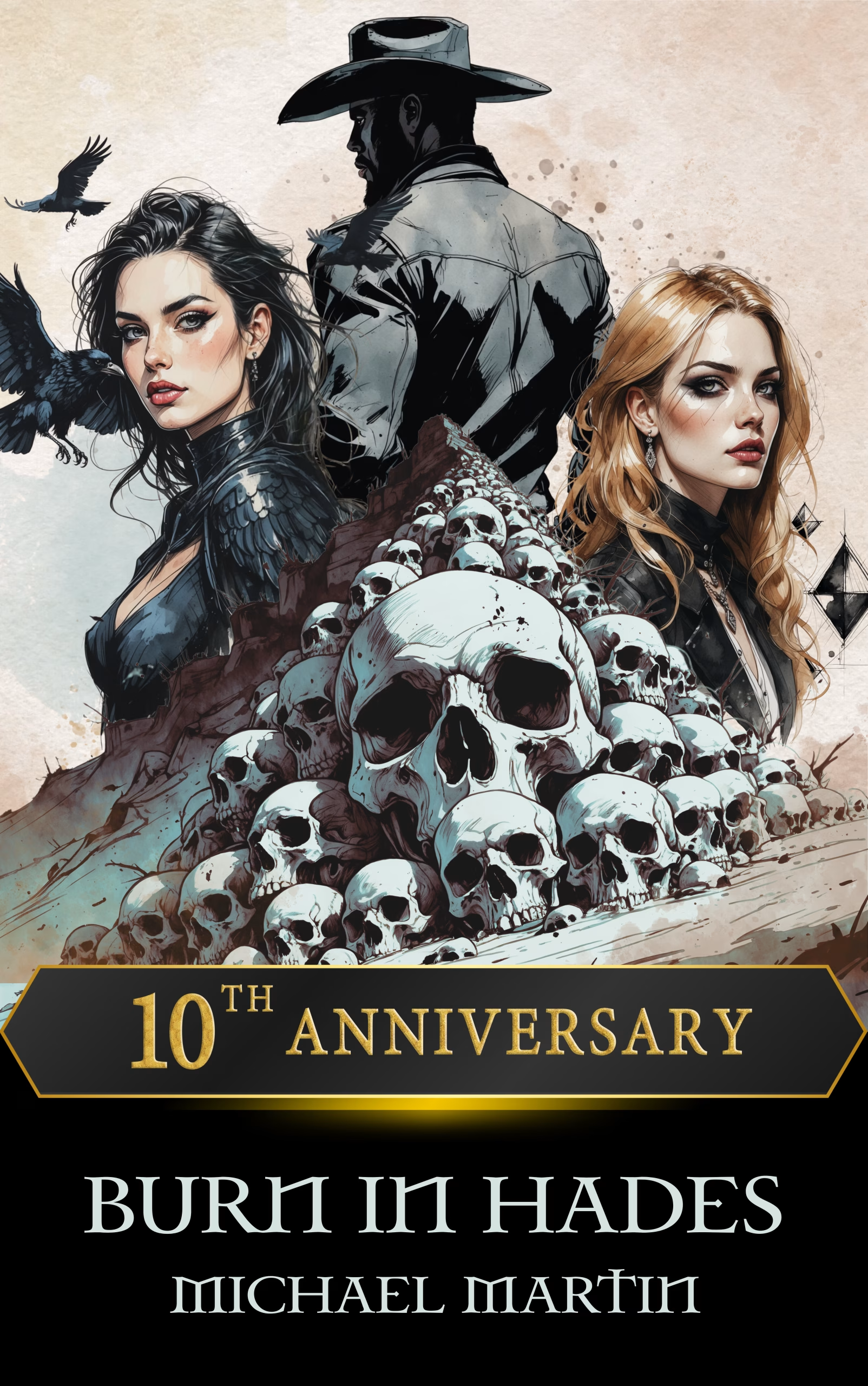
In my novel Burn In Hades, I translated the volatile friction of prestige screenwriting directly into prose.
The Underworld is not a sanitized, classical Dantean theme park, nor is it a monotone grimdark slog. The protagonist, Cross (Charles Hill), is a 19th-century mortal soul carrying the heavy trauma of mortal subjugation and grief into the afterlife. He faces cosmic horror under the primordial tyranny of The Master of the Underworld and the constant threat of soul-erasure via Second Death.
Yet, that epic mythological dread is continually colliding with the absurd, abrasive reality of his day-to-day survival:
- Cross confronts soul-devouring squals while casually complaining about having his dinner interrupted.
- He navigates cosmic judgment while dealing with skeletal Ankou ferrymen who deliver cryptic, archaic monologues like bad slam poetry.
- He wrestles with spiritual damnation while executing the greasy, mundane mechanics of butchering fireproof Barbot birds for edible meat.
The profane absurdity does not diminish the existential stakes—it sharpens them. By denying the reader a safe, comfortable emotional groove, the story forces you to feel every single hit.
How to Spot Kinetic Dissonance in a Story
Quick Answer
You can spot Kinetic Dissonance when a narrative refuses to buffer opposing emotional extremes, forcing existential dread and visceral absurdity to escalate simultaneously within the same scene. Unlike stories using sequential comic relief to defuse stakes, dissonant fiction relies on uncompromised cognitive friction to demand active visualization and deepen narrative resonance.
Identifying genuine Kinetic Dissonance requires looking past superficial genre mashups. A story that merely drops a sarcastic character into a fantasy landscape is often just deploying standard, safe comic relief.
True dissonance is structural. Use this four-point framework to diagnose whether a story is generating active tonal friction or settling into comfortable, monotone tropes:
- 1. Simultaneous Escalation (No Pressure Valves): In conventional fiction, comedy lowers the dramatic stakes to let the reader breathe. In a dissonant narrative, the absurdity and the stakes escalate in lockstep. When a soul in the Underworld faces the irreversible disintegration of their Ruach, having a skeletal ferryman deliver the verdict like a smug, archaic poetry slam does not make death comical—it makes the cosmos terrifyingly callous.
- 2. Absence of Explanatory Buffers: Monotone writing uses transitional padding to apologize for abrupt shifts in mood. Dissonant storytelling strips away the shock absorbers. The narrative cuts straight from cosmic horror to the mundane grit of survival without narrative hand-wringing.
- 3. Uncompromised Registers: Neither tone yields to the other. The sacred remains genuinely epic, dangerous, and high-stakes; the profane remains sharp, cynical, and messy. If the comedy defangs the danger, the dissonance has failed.
- 4. Load-Bearing Texture (Anti-Skim Architecture): The momentum is fueled by sensory friction rather than algorithmic formulas. Plot mechanics, lore keys, and emotional truths are woven directly into bizarre, high-friction world details that punish passive skimming and reward deliberate attention.
Escaping the Tourist Lane
The modern publishing machine continues to churn out frictionless, predictable formulas designed for quick dopamine hits and passive consumption. But if you are exhausted by single-frequency grimdark slogs and sanitized cozy escapism, you do not have to stay in the tourist lane.
Kinetic Dissonance is the engine that drives The Promise of Collision—the foundational pillar of the entire Vaudesy Framework. It was engineered specifically for “Settlers” and deep-diving readers who crave narrative density, complex world architecture, and stories that refuse to fit into safe little genre boxes.
To experience this volatile tonal friction firsthand, explore the mythic underworld of Cross in Burn In Hades.
Step out of the algorithmic void, claim your copy of the Vaudeverse ACT I: Starter Pack—featuring Burn In Hades, the meta-satire webnovel Plot Device, and the short fiction collection UNOPTIMIZED—and pull up a chair inside The Vaudrium . We don’t skim here.